
"My Gift to the Future"
Celebrating the completion of the Patricia Huberty Conservation Easement.

A beech-maple climax forest has been protected forever,
thanks to Pat Huberty and Richard McBride!
The forest rings with the shouts of spring peepers and the clatter of wood frogs. Picking your way through bright green bunches of wild leeks and beech tree trunks like elephant’s legs, you arrive at the sound’s source: a small, shallow pond, the tree reflections in its surface quivering from the movement of all those love-struck amphibians.
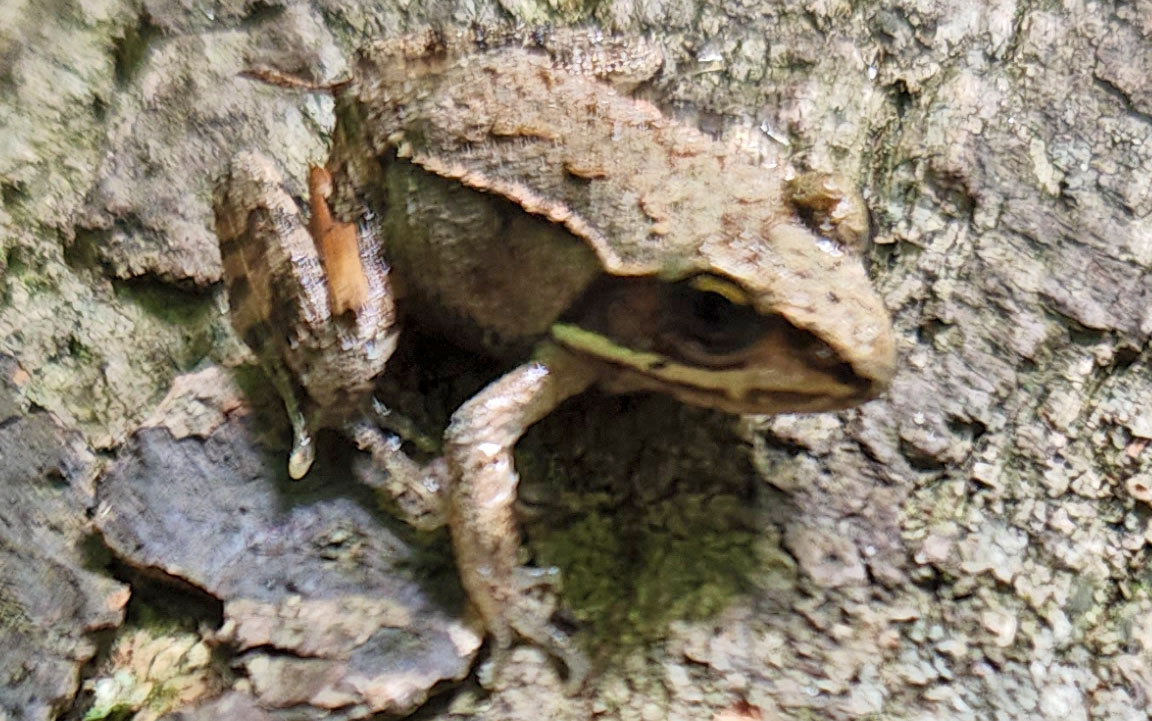
This amphibian haven exists due to the conservation spirit of Pat Huberty’s family, who have protected this beautiful forest from logging since they purchased the land back in the 1950’s. Now, Pat and her husband Richard “Mac” McBride have generously donated a conservation easement (CE) and its associated costs to SWMLC, ensuring this precious habitat and the land around it will be protected forever.

Pat’s dad, Elmer, was an electrical engineer but his true love was farming. And even though the family moved around a lot – sometimes even as far away as Chicago – they visited the farm on frequent weekends and Pat, an only child, helped out with the chores. Elmer built the soil back up and raised hay, row crops, and cattle. Maple sugaring was such a big part of the farm’s history (and still is) that her dad finally had to fill in the foundation of an old 1800’s sap house after a calf fell into it. He also dug two farm ponds to help irrigate the crops and water the cattle and stocked them with bluegills.

Elmer Huberty had a good eye for prime farmland. Some 50 years after buying it, the property and surrounding area were identified as a high priority agricultural management area in the 2008 Paw Paw River Watershed Management Plan. Keeping it from being developed and clean of pollutants is important and about 77% of the 151-acre Patricia Huberty CE is still cultivated under a lease to a local family-owned farm.


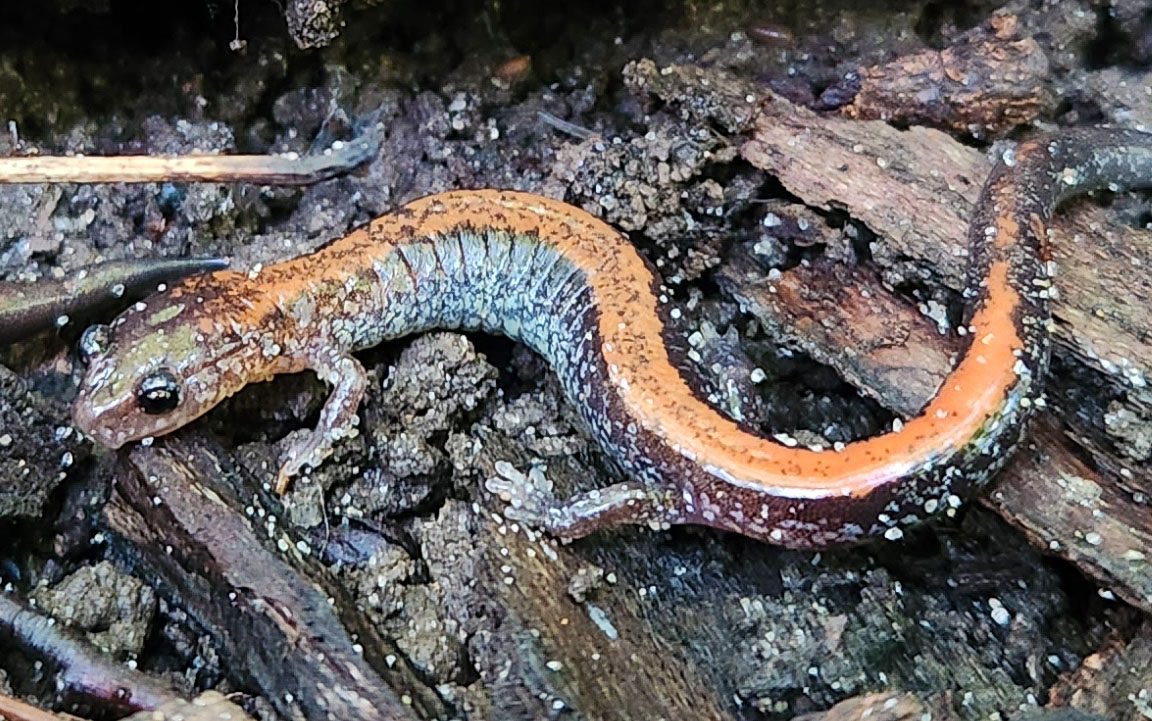
But to the local frogs and salamanders, the 43-acre beech maple climax forest with its vernal pools and wooded swamps is the property’s main attraction. Because vernal pools usually dry up in the summer, they can’t support hungry fish that might eat amphibian eggs, making the shallow woodland ponds vital breeding areas for many species of frogs, toads, and salamanders. At Patricia Huberty CE, spring peepers and wood frogs are plentiful, as well as red-backed and blue-spotted salamanders. Remarkably – SWMLC’s Land Protection Team found a very unusual blue-spotted/tiger salamander hybrid that is considered “unisexual,” with about 99% of individuals being female!
SWMLC’s Land Protection Director, Kaleigh Winkler, was there the day the team found the hybrid salamander and offered this first impression, “The woodland had a calming, ancient feel with the sunlight just peeking through the towering beech and maple trees. Wood ducks dabbling, wood frogs hopping, and salamanders curled up safe beneath fallen logs – you could tell right away there was something special about this place.”
Patricia Huberty CE is located close to SWMLC’s public Jeptha Lake Fen and limited-access Sarah Delle Hultmark Preserves. Its old-growth forest is nearly contiguous with other large tracts of forested land and wetlands. Cattle wandered through it in the past and a small number of trees were cut in the 1970’s, but otherwise, this impressive woodland has been allowed to follow its natural course and is quite free from the usual invasive plants. Wildflowers such as bloodroot, trilliums, May apples, and spring beauties carpet the ground in spring. And it has some amazingly big, old trees.

Pat and Mac know the giant trees are very valuable and attractive to timber-buyers, but they’re not interested in selling them. “I was concerned someone would cut those woods,” Mac remarked and Pat chimed in, “They’re not making woods like those anymore.” She’s right, because researchers say that it can take several centuries for a forest to reach the healthy biologically steady-state known as climax, and there aren’t many of them left. When asked why they chose to conserve their land rather than harvest it, Pat said simply, “It’s my legacy. Protecting the land is my gift to the future.”
