
Causeway Repairs at Portman Nature Preserve

August 27, 2025
The causeway dam repair project at Portman Nature Preserve is mostly finished and the preserve has reopened!
The earthen dam looks a bit raw right now but SWMLC’s Stewardship Crew have started the healing process by spreading native plant seed over the freshly graded soil – a mix that includes sandy savanna species like little bluestem grass, fox sedge, and black-eyed Susan, and wetland faves like blue lobelia and swamp milkweed. They covered the seed with erosion control blankets to keep everything in place, so please give those plants a chance by staying off the blankets!
While the causeway heals and the bank stabilizes, we ask that people respect the temporary barricades by staying within the ropes and ON the trail. In the weeks to come, the Stew Crew will add split rail fences to reinforce these boundaries. We also ask that people stay out of the areas where the new overflow pipe takes in water from Mud Lake and releases it into the wetland on the other side of the dam, because too many feet will cause new erosion issues.


It’s hard to picture, but 70 years ago, there was no way to get to the back of the property on foot without mucking through the wetlands. Historic aerial photos show us that Mud Lake was much smaller and shallower back then, and was connected to Cedar Lake to the east by a stream flowing through a large wetland. Sometime between 1955 and 1967, a north-south earthen dam was constructed that was wide enough to allow a vehicle to get to the woods in the back part of the property.
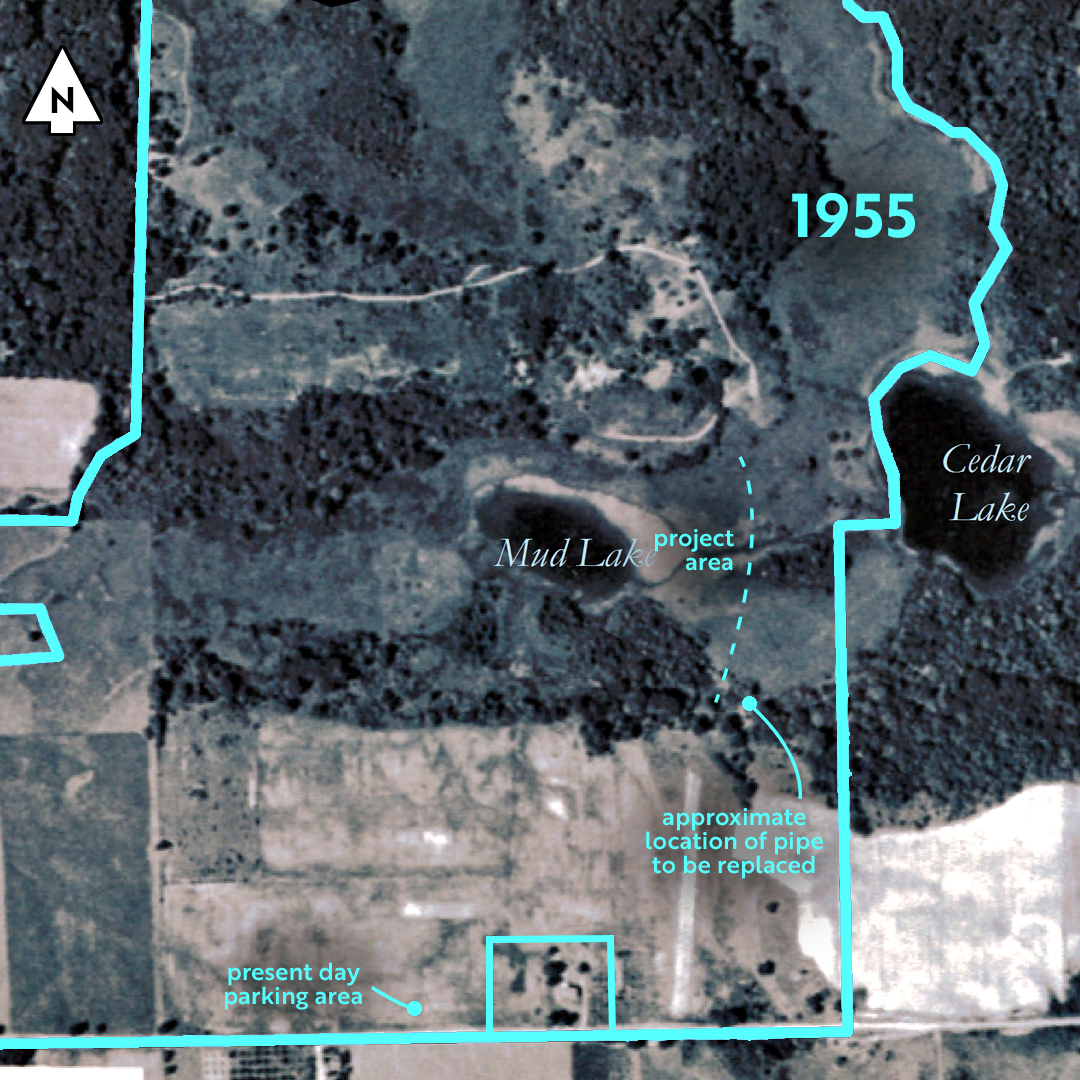

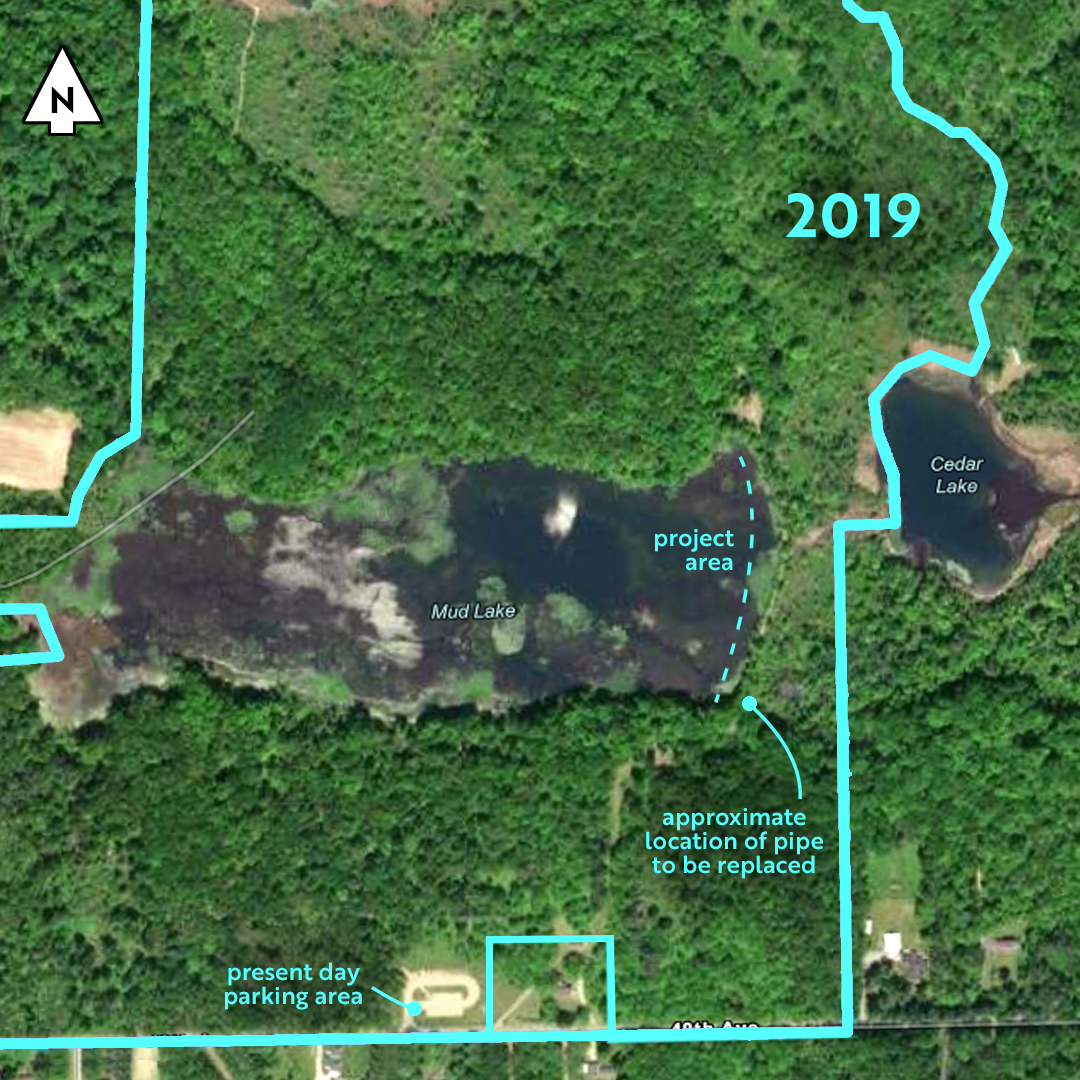
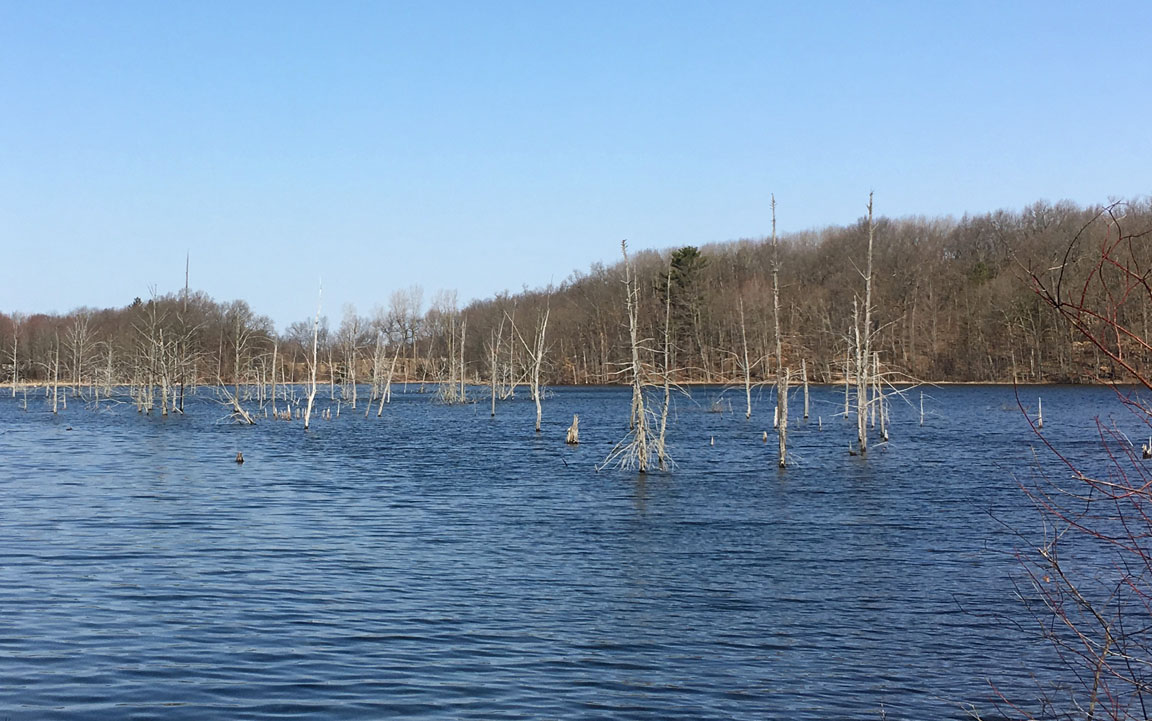
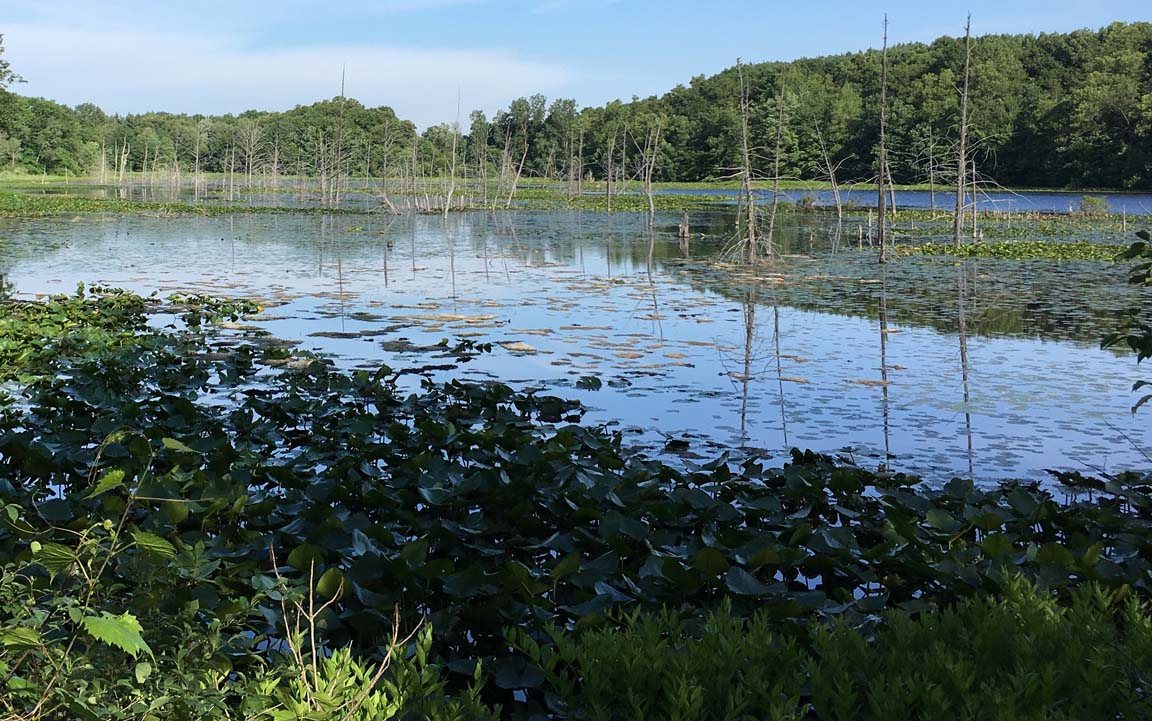
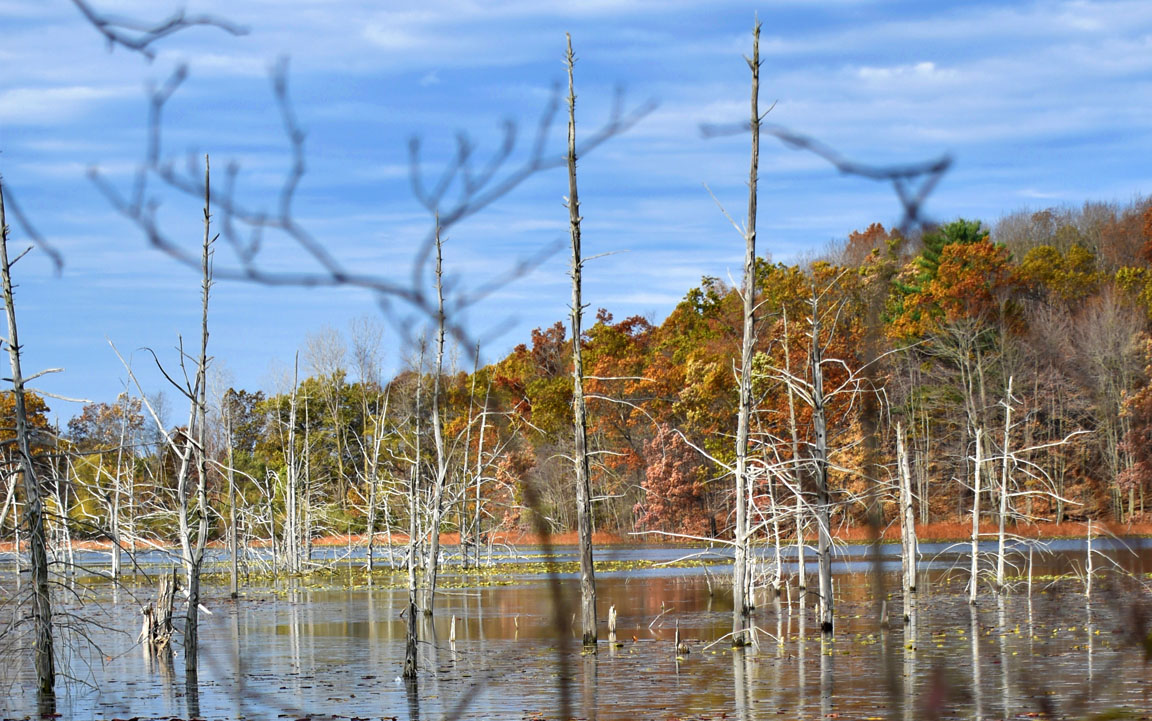
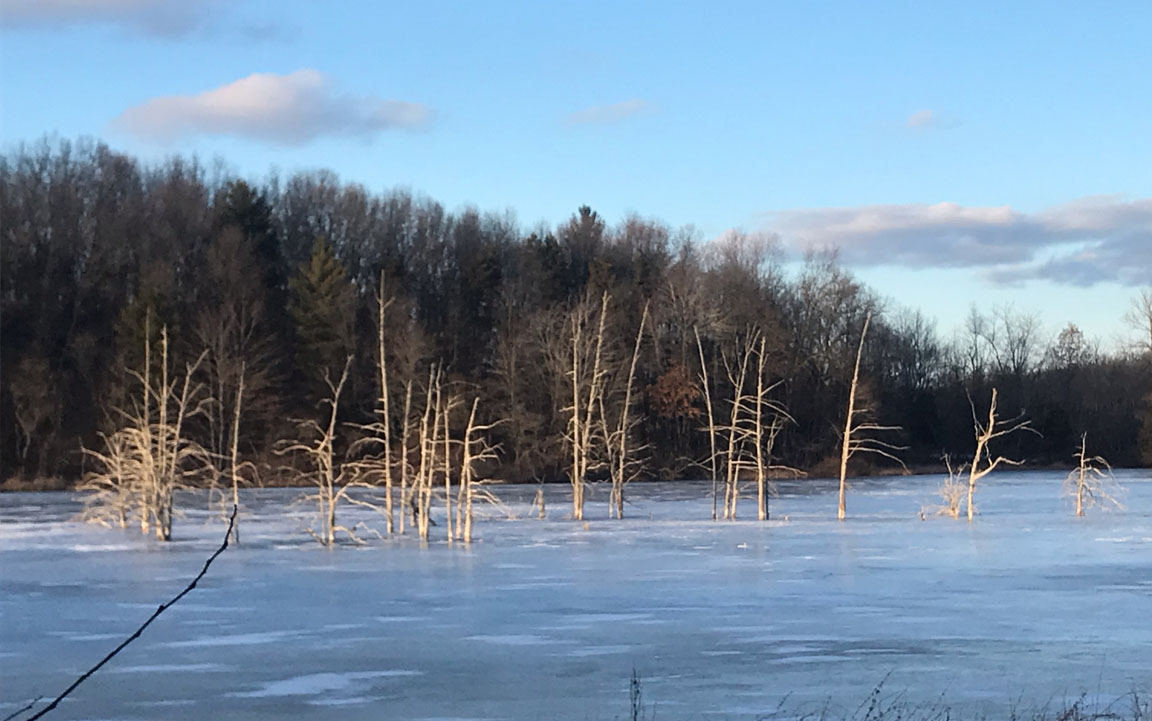
With its natural outlet blocked, Mud Lake grew bigger and deeper. Some of the adjacent wetlands were flooded, and we can still see the skeletons of the drowned tamarack trees standing in the water.
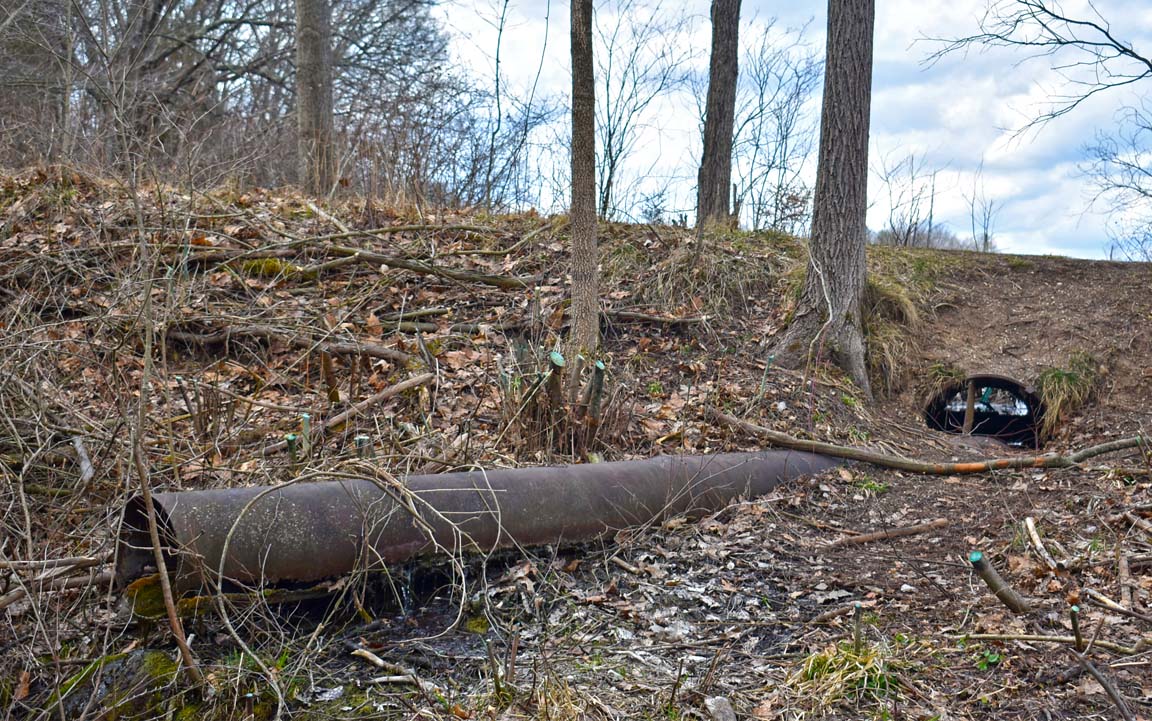
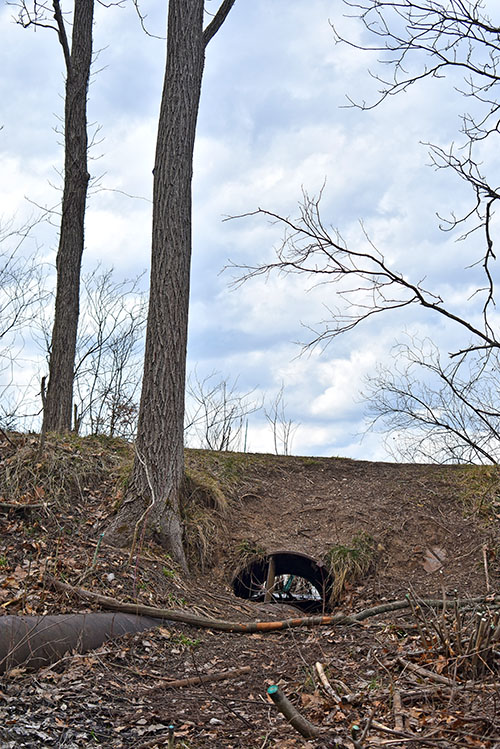
A new outlet was constructed through the southern end of the dam (which we also refer to as a ‘land bridge’ or ‘causeway’) and we can still see it today: that undersized pipe at the bottom of the hill with water trickling out of it, just before the trail crosses the lake. Decades later, the pipe is no longer working. Water seeps right through holes in its rusty surface or, when the water is high, it rushes around the pipe, crumbling the dirt and allowing the trail to start caving in.
The rotten pipe isn’t the only problem. Over time and after decades of stormy wave action, the earthen dam itself is failing. You may have noticed areas where the bank has eroded away, or where the lake edge is slowly creeping closer to the trail. Soon, the trail will be unsafe for preserve users, and SWMLC’s stewardship crew won’t be able to drive vehicles across, making it impossible to do crucial habitat restoration work like prescribed burns.
The land bridge must be repaired before it’s too late.

So, SWMLC contacted the U.S. Fish and Wildlife Service for help. With their expertise, grant funding, and engineering, work began even more quickly than we thought possible. Phase 1 took place in October 2024; Phase 2 began in April 2025; rested over the summer; and was nearly complete in August 2025.
In Phase 1, we removed all the vegetation on the Mud Lake side of the dam (ugly, we know). We replaced that tattered old pipe with a new, better positioned one that’s connected to a water control device embedded in crushed stone to keep it in place. Similar to the structures we’ve installed at Spirit Springs Sanctuary, this device will allow us to control the depth of the water in Mud Lake.
Tap here to see learn more about the water control device at Spirit Springs Sanctuary.
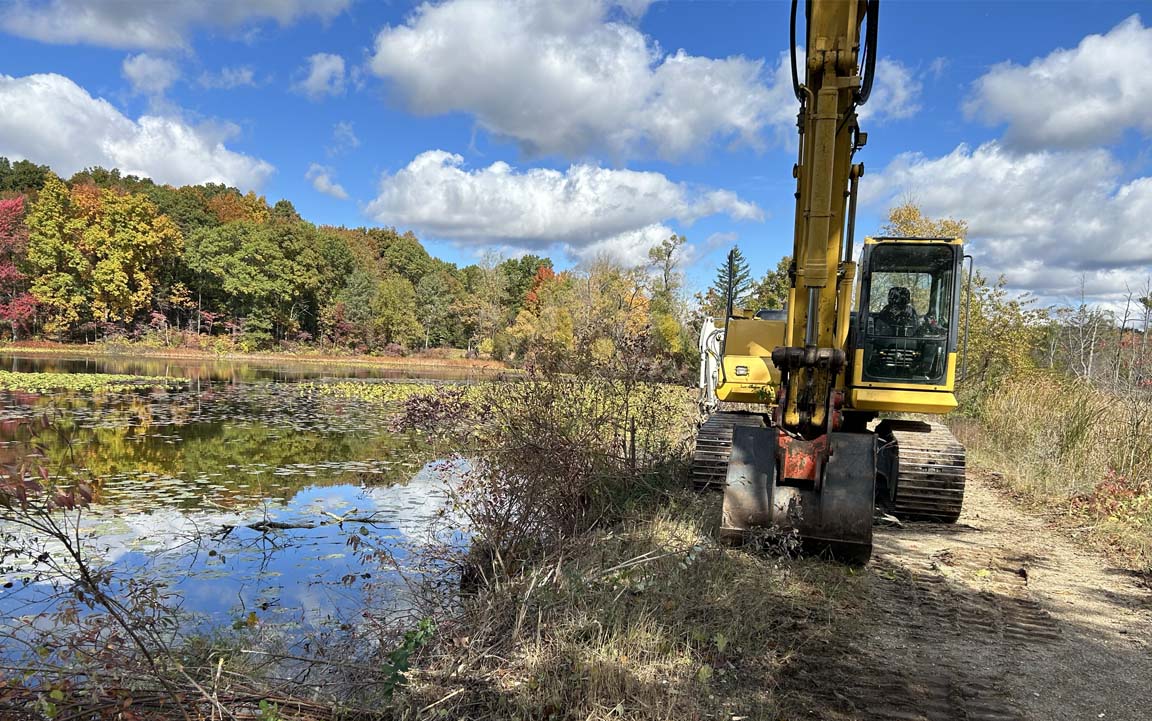

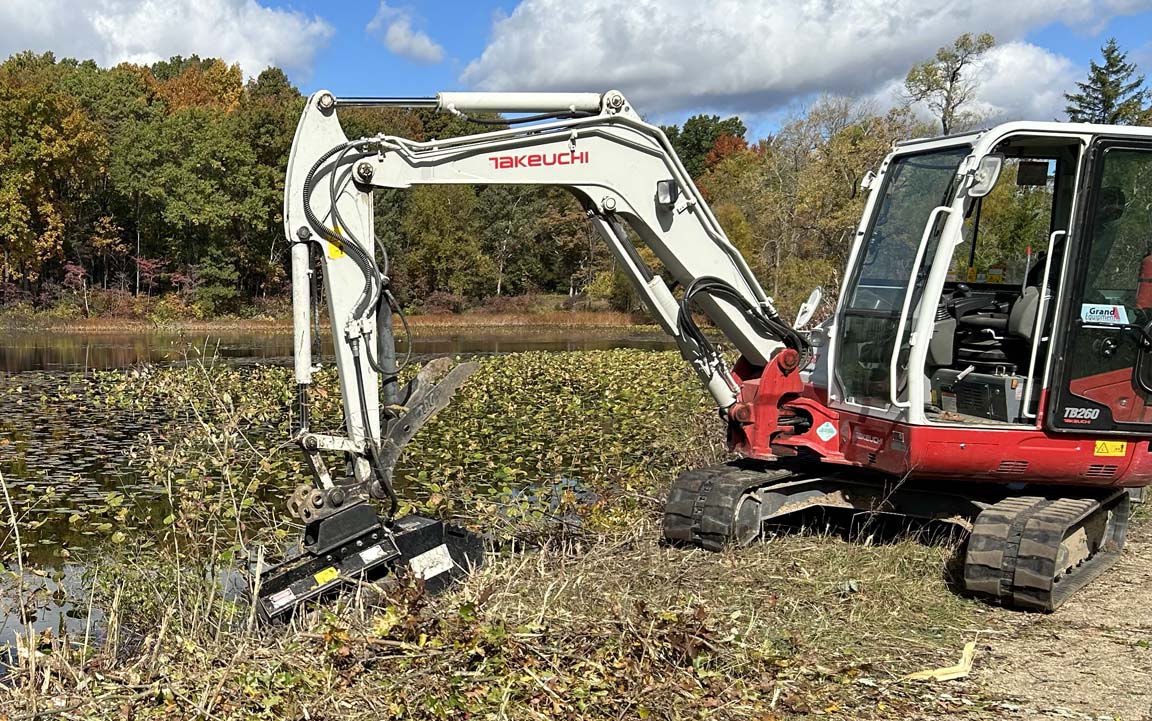


Phase 2 began after the weather warmed enough for hibernating reptiles and amphibians to awaken and become active.


SWMLC staff have been slowly dropping the water level in Mud Lake since April and it’s now low enough to start the next step. In accordance with state environmental permits, contractors will scoop sand and gravel directly from the lake bottom and from a “borrow pit” just up the hill (so that no new invasive species, like Eurasian Water Milfoil, are introduced to the preserve from outside sources) and use it to build up the earthen dam. The contractors will sculpt a more gradual angle on the lake side of the dam to keep waves from eating away at it when it’s windy and build a new concrete spillway under one small section to help relieve stress and pressure during storms when the water is high and active.
It will be very interesting to see what happens after the project is done and lake levels stabilize. We’re expecting to see a wider variety of plants in the shallows along the shoreline that, in turn, provide habitat for more kinds of creatures – plus maybe a few surprises, too!
The finished dam will be stronger, allowing both visitors and SWMLC’s maintenance vehicles to safely cross to the back of the preserve for many years to come. And we will take comfort in knowing that the downstream fen habitats – home to endangered Mitchell’s satyr butterflies and eastern massasauga rattlesnakes – are protected from potential catastrophic flooding caused by a weak dam breaking.